
Can Probiotics Improve Thyroid Symptoms? What the Research Says
What Probiotics Can (and Can’t) Do for Underactive Thyroid
Have you ever Googled “best probiotic for constipation” or wondered why you still have gut issues despite eating healthy, or felt frustrated that your thyroid medication isn’t enough to improve your gut-related symptoms?
Women with underactive thyroid and/or Hashimoto’s often deal with lingering symptoms like:
- Constipation
- Brain fog
- Bloating
- Fatigue
And with all the information around about the importance of gut health and links with all sorts of health issues, this is where the focus on gut health and thyroid issues come into play.
Your blood test results can look ‘good’ and you can still feel… not good”. If you’re still experiencing constipation, bloating, brain fog, and fatigue, then you may need to look into supporting your gut too.
In this blog, you’ll learn:
- What research says about probiotics and thyroid function,
- Which strains may help symptoms like constipation and brain fog, and
- How to time probiotics with thyroid meds.
TLDR – May help: constipation, bloating, brain fog, mood support.
Won’t reliably change: TSH/T3/T4 in most studies.
Works best when: you combine food-first gut support with the right strains, and correct timing away from thyroid meds.
What the Research on Probiotics & Thyroid Shows
A 2024 meta-analysis found that probiotics don’t significantly change TSH, free T4 or T3 levels in hypothyroid patients .
BUT… that doesn’t mean they’re useless.
Several trials show that gut symptoms improve, including:
- Less bloating
- Improved bowel regularity (less constipation)
- Reduction in gas and abdominal pain
The Gut–Brain–Thyroid Axis
Your thyroid doesn’t work in isolation. It’s in constant communication with:
- Your gut (via nutrient absorption and immune cells)
- Your brain (via the hypothalamus–pituitary–thyroid axis)
- Your nervous system (think: stress, mood, vagus nerve)
So when your gut is inflamed, isn’t working properly, or your good gut bugs are imbalanced, your thyroid certainly feels it.
Here’s how probiotics may support this network:
Constipation
Sluggish digestion is common in hypothyroid women. Probiotics can improve motility and gut transit time, especially strains like Lactobacillus plantarum and Saccharomyces boulardii .
Brain fog and tiredness
Certain strains (like Lactobacillus rhamnosus and Bifidobacterium longum) support GABA (calming chemical) production and calm the nervous system so you’re not always in “flight, fight or freeze”.
Hormone conversion
While not a direct fix, healthier gut bacteria may reduce inflammation that interferes with T4 to T3 conversion. This is because about 20-40% of inactive T4 is converted to the active T3 in your gut.
Immune regulation
In Hashimoto’s, balancing the gut microbiome may reduce autoimmune signalling and support more immune tolerance.
So no, while probiotics won’t, and shouldn’t replace your thyroid medication, they may help your body use thyroid hormones better.
Some research also suggests probiotics:
- Modulate immune function (this is key for autoimmune thyroid issues like Hashimoto’s)
- Support absorption of minerals like zinc, selenium and iron, which are all crucial for thyroid hormone production
- Improve mood and anxiety via the gut–brain axis, which often overlaps with thyroid symptoms
So while your TSH might not budge, your symptoms and quality of life often do.
Starting with Food
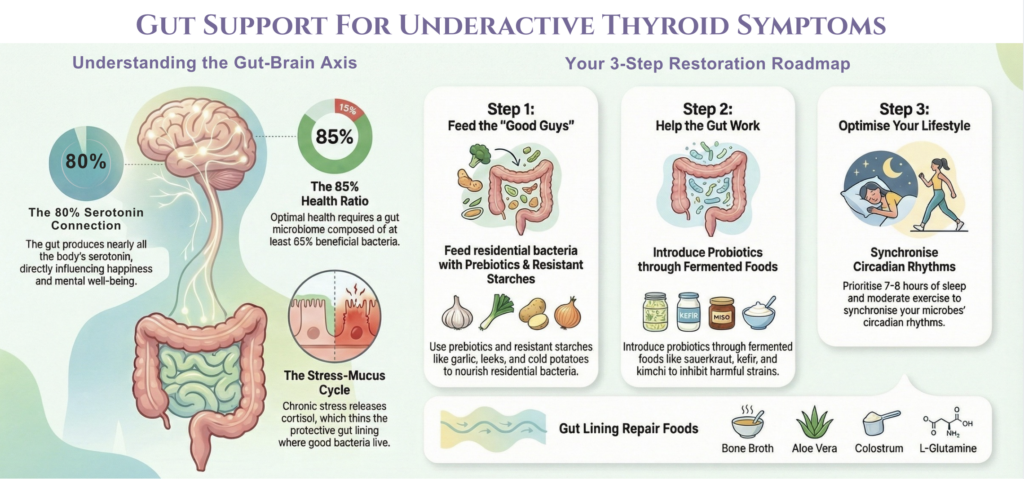
Before we talk supplements, here’s a simple thyroid-friendly 3-step gut roadmap you can start today:
- Feed the good gut bugs (prebiotic fibre/resistant starch)
- Help the gut do its work (fermented foods and regularity support)
- Optimise your lifestyle (sleep/stress factors that affect gut and thyroid symptoms)
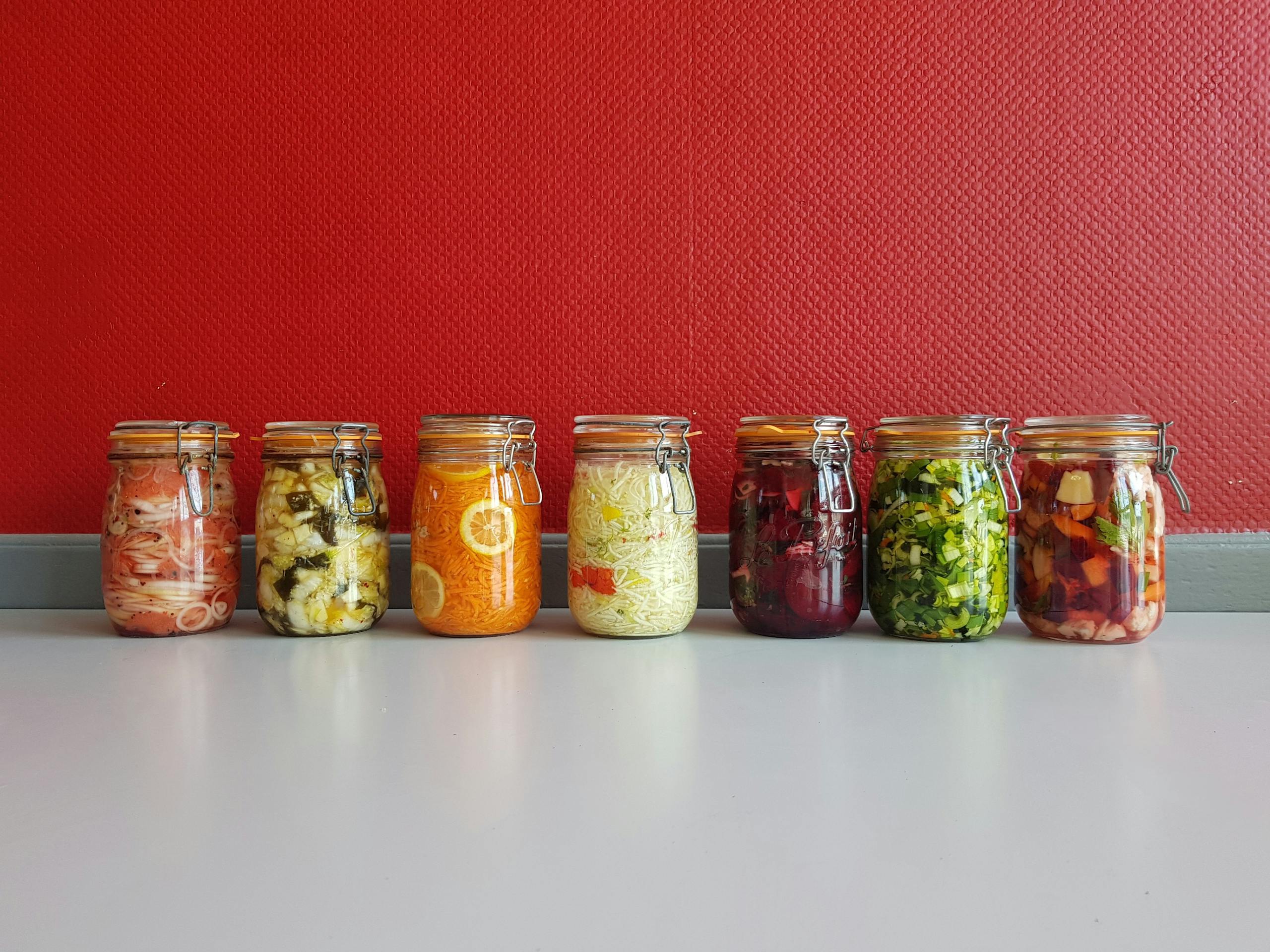
Fermented foods like sauerkraut, kimchi, kefir, yogurt, beet kvass, and kombucha, all naturally contain beneficial bacteria such as Lactobacillus plantarum, Bifidobacterium longum, and even yeast-based strains like Saccharomyces boulardii.
These traditional foods have been used for centuries to support gut and immune health, and modern research now shows they can help:
- Improve digestion and regularity
- Support mineral absorption (especially zinc, selenium, iron, which are crucial for thyroid function)
- Enhance mood and calm the nervous system
- Strengthen immune defences and gut lining integrity
Many women with underactive thyroid symptoms find that adding fermented foods to their meals, starting with 1 teaspoon to ½ cup a day helps ease bloating, improve bowel regularity, and reduce that “tired but wired” feeling that comes with gut–brain dysregulation. If you’re new to fermented foods, start with a teaspoonful first and gradually increase the amount you eat.
If you’re not sure where to start, sauerkraut and kimchi are easy to add to cooked meals as a condiment. Kefir and yoghurt work well in smoothies or dressings, and small glasses of kombucha or beet kvass can support digestion and stable energy throughout the day.
Combining gut support with nourishing meals can help you get better results faster. You can start with eating mostly unprocessed foods, or trial targeted probiotics; every step you take adds up to improving your gut and thyroid symptoms.
Choosing the Right Probiotics Strains
Note that not all probiotics are created equal, and where possible, it’s best to match strains to the symptoms you’re experiencing.
Best strains to use:
- Bifidobacterium longum – supports mood and gut lining
- Lactobacillus plantarum – relieves constipation and inflammation
- Saccharomyces boulardii – yeast-based probiotic for immune balance, especially after antibiotics
- Lactobacillus rhamnosus GG – shown to support GABA and anxiety regulation
Synbiotics (combined probiotics and prebiotics) may be more effective than probiotics alone for improving quality of life in hypothyroid patients. Prebiotics which are a type of fibre we can digest, so act as food for the probiotics (good bacteria). They include foods like garlic, artichokes, leeks, asparagus, and some other fruits and veggies.
How long to take them?
You’ll need to stick with it for at least 4–8 weeks to get the full benefit. And if your gut is sensitive, always start low and go slow.
Grab my free Probiotics Quick-Start Handout for a short guide on using probiotics correctly.
Probiotics And thyroid meds:
If you’re taking thyroid meds, you already know that timing is important. Levothyroxine absorption is sensitive and doesn’t play well with foods, supplements, or medicines, so it’s best to leave a 3–4 hour gap between your meds and probiotics just to be on the safe side.
If you’re dealing with constipation, bloating, and brain fog on top of underactive thyroid symptoms, probiotics can help, but they work best when the rest of your gut foundations are in place too.
If you’re not sure what to eat to support both your gut and thyroid symptoms, start with a food-first plan. My GEMM recipes are designed to be digestion-friendly and nutrient-dense, so you can support healthy bowel movements, energy, and immune balance without giving up on taste. See the GEMM recipes, and other meal plans and recipes here.
FAQs
Most studies show no significant change in TSH, T3 or T4, but improvements in gut symptoms, mood, and nutrient absorption can make a difference to how you feel without relying on numbers. You’re more than just a number on a sheet of paper.
Yes. Just avoid taking them at the same time. Leave a 3–4 hour gap between your prescription thyroid meds and probiotics.
Strains like Bifidobacterium longum, L. plantarum, L. rhamnosus, and Saccharomyces boulardii have the most promising evidence for gut and immune support. I also love HKL-137.
Some early research shows they may reduce TRAb in Graves’, but we don’t yet have consistent data for TPO or TgAb in Hashimoto’s. The immune benefits are still promising.
This can happen if there’s underlying SIBO, histamine issues, or you’re taking too high a dose. Work with a practitioner and consider gentler options or spore-based strains.
Yes. Fermented foods like kefir, kimchi, sauerkraut, yogurt, and kombucha provide many of the same strains (plus beneficial enzymes, fibre, and phytonutrients). They also improve nutrient absorption and gut lining support. The key is to eat a variety and be consistent, and remember to start small and increase gradually to prevent bloating or digestive distress.
References
- Qinxi Shu et al. (2024) – “Effect of probiotics or prebiotics on thyroid function: a meta-analysis of eight randomized controlled trials” 2024 Jan 11;19(1):e0296733.
- Spaggiari G. et al. (2017) – “Probiotics ingestion does not directly affect thyroid hormonal parameters in hypothyroid patients on levothyroxine”. 2017 Nov 14:8:316. doi: 10.3389/fendo.2017.00316.
- Ramezani et al. (2023). The effect of synbiotic supplementation on hypothyroidism: A randomized double-blind placebo controlled clinical trial. PLos One. 2023 Feb 6;18(2):e0277213. doi: 10.1371/journal.pone.0277213. eCollection 2023.
- Karolina Zawadzka et al. (2023). Are probiotics, prebiotics, and synbiotics beneficial in primary thyroid diseases? A systematic review with meta-analysis. Annals of Agricultural and Environmental Medicine 2023, Vol 30, No 2, 217–223.
- Eleonore Fröhlich, Richard Wahl (2019). Microbiota and Thyroid Interaction in Health and Disease. 2019 Aug;30(8):479-490.
doi: 10.1016/j.tem.2019.05.008.Epub 2019 Jun 27.

